

Is El Niño the Climate Wake-Up Call Businesses Can No Longer Ignore?

What Is El Niño—and Why Is It Back in the Boardroom Conversation?
El Niño is no longer just a scientific term reserved for climate experts; it has become a boardroom issue with real financial implications.
The latest El Niño cycle, intensifying through 2024–2025, has already been linked to record-breaking global temperatures, with 2024 confirmed as the hottest year on record.
(and most likely 2026 will break the historical records again soon...)
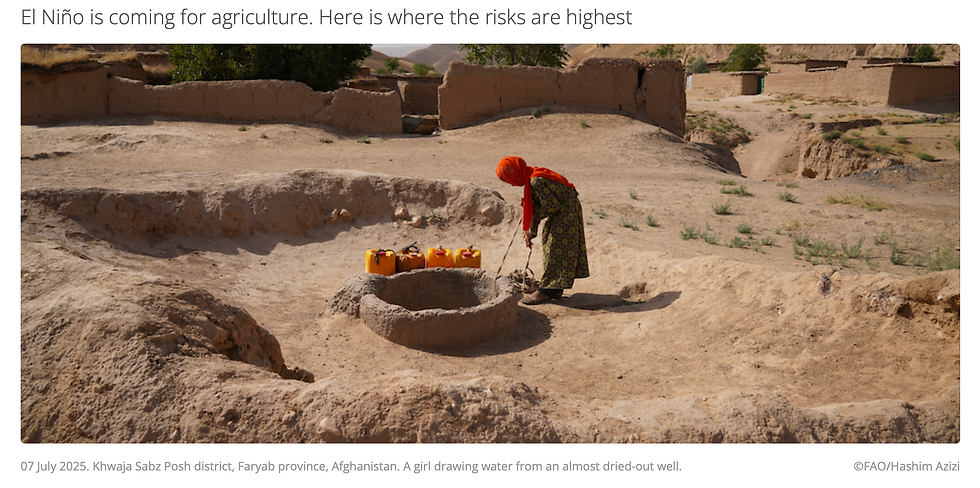
This warming phenomenon disrupts weather systems worldwide—triggering floods in some regions, droughts in others, and amplifying supply chain volatility.
For business leaders, this is not just an environmental concern; it is a material risk that directly impacts operations, costs, and long-term resilience.

How Are Global Markets and Supply Chains Being Reshaped?
From agricultural yield disruptions in Southeast Asia to water stress in key manufacturing hubs, El Niño is reshaping global supply chains.
The World Bank estimates that climate-related disruptions could reduce crop yields by up to 10–25% in vulnerable regions during strong El Niño cycles.
For Hong Kong, a global trade and logistics hub, the ripple effects are significant—higher food prices, increased insurance costs, and operational uncertainties.
Businesses reliant on imported resources or regional supply chains are particularly exposed, making climate risk integration into enterprise strategy more urgent than ever.
What Does This Mean for Hong Kong’s Business Landscape?
Hong Kong is not immune.
The Hong Kong Observatory has reported increasingly extreme weather patterns, including hotter summers and more intense rainfall events. For sectors such as real estate, finance, and infrastructure, this translates into higher physical risks and asset vulnerabilities.
At the same time, regulatory expectations are tightening. The Hong Kong Stock Exchange (HKEX) is aligning its ESG disclosure requirements with international standards, pushing listed companies to enhance climate-related disclosures and risk management practices.
El Niño serves as a real-time stress test of how prepared organizations truly are.

Are ESG Frameworks Keeping Pace with Climate Reality?
The evolution of ESG frameworks is increasingly aligned with these climate realities. The ISSB’s IFRS S2 standard, building on TCFD recommendations, requires companies to disclose climate-related risks, scenario analysis, and financial impacts.
Meanwhile, frameworks like TNFD are gaining traction, emphasizing nature-related risks—particularly relevant as El Niño disrupts ecosystems and biodiversity.
Companies aligning with SBTi are also under pressure to ensure their decarbonization pathways remain credible despite climate variability.
In this context, ESG is no longer about reporting—it is about resilience, adaptation, and strategic foresight.

How Should Businesses Respond Beyond Compliance?
Forward-thinking organizations are moving beyond compliance toward climate resilience.
This includes stress-testing supply chains, diversifying sourcing strategies, investing in climate-adaptive infrastructure, and embedding ESG into core decision-making.
According to recent industry insights, companies with robust climate risk strategies are more likely to outperform peers in long-term value creation.
El Niño is not an isolated event; it is a signal of increasing climate volatility. Businesses that act early will not only mitigate risks but also unlock opportunities in sustainable innovation and green finance.

Is This the Turning Point for ESG Leadership?
El Niño is a reminder that climate risk is no longer a distant scenario—it is happening now, with measurable financial consequences.
For leaders in Hong Kong and beyond, the question is no longer whether to act, but how quickly and effectively they can respond.
ESG leadership today means anticipating disruption, aligning with global standards, and building resilience into every layer of the business. Those who treat this moment as a catalyst—not a crisis—will define the next generation of sustainable growth.
No longer just a compliance click box exercise....think it as a risk management tool and add to your organizations' competitive advantages!


Comments