

Over-Green? and the Impacts

The “Over-Green” Problem: When Sustainability Starts to Work Against Itself
Sustainability has moved from a niche concern to a mainstream business priority. That shift is positive, but it comes with a new risk: becoming “over-green.”

By that, I mean ESG efforts that look impressive on the surface yet create confusion, waste resources, or weaken credibility because the program is oversized, over-claimed, or poorly tied to real outcomes.
What “Over-Green” Looks Like in Practice
“Over-green” can show up as ambitious claims without delivery, polished storytelling without reliable data, or complex frameworks that add reporting workload without improving decisions.
reference reading in previous blog: https://www.ecovision.com.hk/post/the-esg-backlash-is-real-so-why-are-climate-and-sustainability-still-moving-forward The ESG Backlash Is Real—So Why Are Climate and Sustainability Still Moving Forward?
As stakeholder expectations rise, some companies respond by adding more labels, more targets, and more communications—sometimes faster than their governance and measurement systems can support.
Two Public Corporate Examples Often Cited
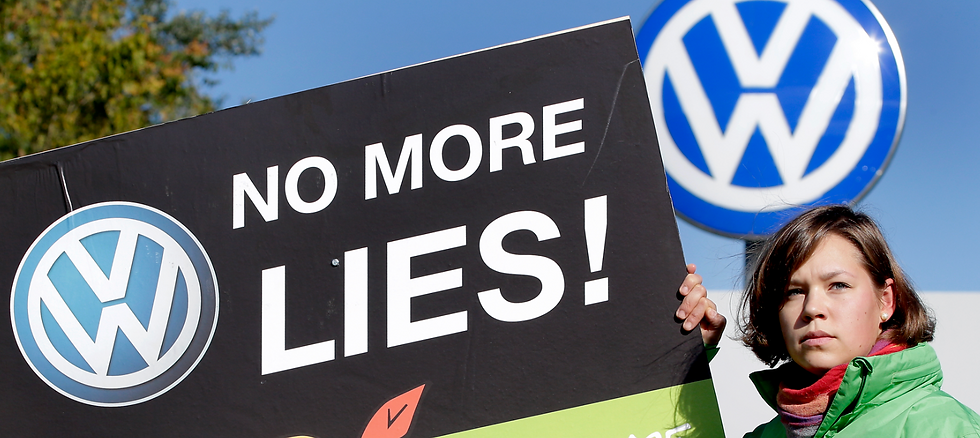
A widely discussed case is Volkswagen’s “clean diesel” positioning, which was later undermined by regulatory findings that emissions testing was manipulated. While the issue centered on compliance and integrity, it is frequently referenced as a reminder that environmental messaging can collapse overnight when claims do not match reality.
Another often-cited example is the 2022 advertising ban involving HSBC in the UK, where the Advertising Standards Authority ruled that certain climate-related ads were misleading because they highlighted environmental initiatives without sufficient context about the bank’s broader financed-emissions profile.
The lesson many professionals took from this was that selective disclosure—however well-intended—can be judged as “over-green” if it omits material information.

The Hidden Costs: Credibility, Capital, and Culture
The most visible downside is reputational.
Once stakeholders sense exaggeration, they may discount everything else you do, including work that is genuinely strong.
The second cost is financial: misallocated capital into headline-friendly projects rather than material improvements like energy efficiency, process redesign, supply-chain engagement, and product reformulation.
The third cost is cultural. Teams can burn out when asked to “do ESG” as a separate job, rather than integrating it into procurement, operations, risk, finance, and strategy.
Why “Over-Green” Happens (Even with Good Intentions)
Many organizations fall into this trap because they want to lead, attract talent, meet customer requirements, or align with global climate goals.
There is nothing wrong with aspiration. The problem starts when ambition is not paired with measurement, governance, and the discipline to prioritize what matters most.
In practice, sustainability works best when it is treated as performance management: clear baselines, credible targets, accountable owners, and repeatable execution.
A Practical Alternative: ESG That Holds Up Under Scrutiny
A strong approach is to focus on materiality and proof. (scientific and evidence based again).
Materiality keeps attention on the issues that truly affect enterprise value and stakeholder outcomes.
Proof means consistent data definitions, audit-ready documentation, and transparent boundary setting (what is included, what is excluded, and why).
It also means being comfortable saying, “We are not there yet,” while showing the plan and the progress.
How Leaders Avoid “Over-Green” Without Losing Momentum
The goal is not to be less ambitious; it is to be more believable.
Start with a few high-impact priorities, build internal capability, and scale what works. Tie sustainability projects to operational KPIs (energy intensity, waste rates, yield, logistics efficiency) and connect them to financial metrics (capex, opex, payback, risk reduction).
Communicate with precision: fewer slogans, more numbers; fewer broad promises, more concrete milestones.
Closing Thought: Credible Progress Is the New Competitive Advantage
In today’s ESG environment, the winners will be the organizations that execute sustainability in a way that is measurable, pragmatic, and embedded into decision-making.
“Over-green” might get attention for a moment, but credible progress earns trust for the long term.
Readings and additional references:
#ESG#Sustainability#Greenwashing#CorporateGovernance#ClimateStrategy#SustainabilityReporting#Materiality#RiskManagement#Decarbonization#Transparency


Comments