

Stranded Asset, why stranded and the impact to your organization

Updated: Feb 10
A stranded asset is a concept widely used in ESG and sustainability discussions.
What is a stranded asset? A stranded asset is an asset that loses its value abruptly or becomes obsolete due to external changes linked to ESG or sustainability factors (regulatory changes, political changes etc...). The asset still exists, but it can no longer generate expected financial returns.

Why do assets become stranded in an ESG / sustainability context?
Common reasons include:
• Climate regulations (e.g., carbon taxes, emissions limits, cap) • Transition to renewable energy and declining demand for fossil fuels • Technological shifts toward low‑carbon solutions • Market and consumer preference changes • Physical climate risks (e.g., rising sea levels, extreme weather) • Reputational or ethical concerns tied to high‑risk or unsustainable practices
Examples of stranded assets in ESG:
• Oil reserves that cannot be extracted due to climate policies
• Coal-fired power plants forced to retire early
• Buildings that fail to meet energy-efficiency regulations
• Equipment dependent on outdated high-emission technologies
• Land or properties exposed to climate‑related physical risks

Impact on a company:
Financial Losses Assets may need to be written down or written off, directly hitting profitability and balance sheets.
Reduced Market Value Investors increasingly factor climate and ESG risks into valuations, leading to declining share prices.
Higher Cost of Capital Banks and investors may view the company as higher risk, increasing borrowing costs.
Operational Disruptions Sudden regulatory or market changes may force companies to shift strategies, interrupting operations.
Reputational Risk Holding assets tied to environmental harm can damage public trust and stakeholder relations.
Strategic Pressure to Transition Companies may need to accelerate investments in low‑carbon technologies, green infrastructure, or sustainable business models.
Competitive Disadvantage Firms slow to adapt may lose market share to more sustainable competitors.
Why it matters: Understanding stranded assets helps companies make smarter long‑term decisions, protect value, and stay competitive in a world that is rapidly transitioning toward sustainability and net‑zero goals.
Before I conclude, let me give you some good corporate example related to the "Stranded Assets":
1. BP (British Petroleum)
• BP announced multi‑billion‑dollar write‑downs of oil and gas reserves after reassessing long‑term energy demand and stricter climate policies.
• Certain reserves may never be extracted profitably, effectively making them stranded.
2. Royal Dutch Shell • Shell wrote down several major fossil‑fuel projects in Canada and elsewhere as their long‑term value declined. • The shift to renewables and rising carbon‑pricing pressures turned these previously profitable assets into liabilities.

3. Peabody Energy (World’s largest private-sector coal company)
• Declining global demand for coal and rising environmental regulations led to major stranded coal assets.
• The company eventually filed for bankruptcy in 2016, widely cited as a stranded-asset case.
4. General Electric (GE) – Power Division
• GE’s gas turbine business suffered significant losses as global energy markets rapidly shifted toward renewable energy.
• Massive overinvestment in fossil-fuel–based power equipment left GE with excess, undervalued, and underutilized assets.
5. EDP (Energias de Portugal)
• EDP had to accelerate the closure of coal plants in Portugal and Spain due to policy changes and carbon costs.
• These plants became stranded as renewables became more competitive.

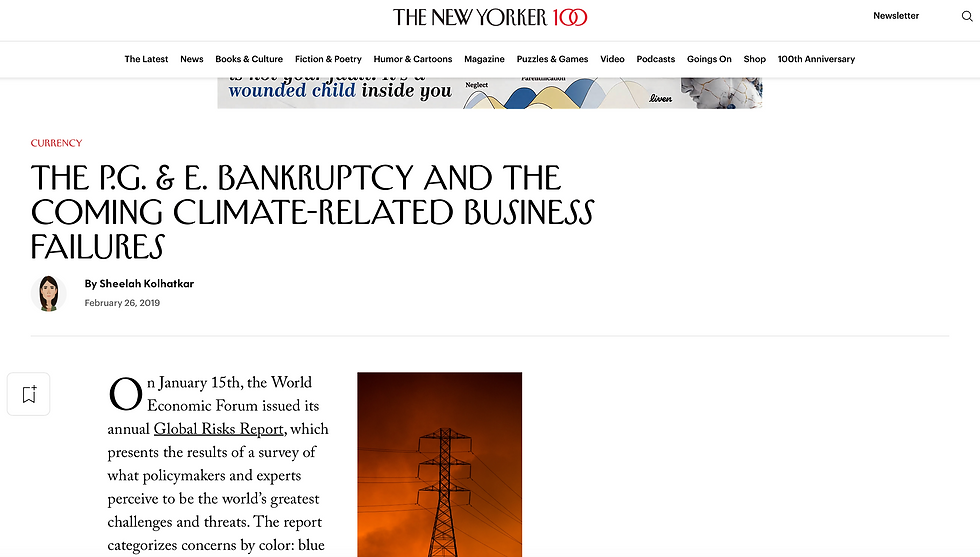
6. PG&E (Pacific Gas & Electric, US) • Wildfire liabilities linked to climate‑change–exacerbated conditions turned major infrastructure assets into stranded liabilities. • The company filed for bankruptcy due to billions in climate‑related losses.
7. Real Estate Developers in Coastal Regions (not a single company, but a major sectoral example)
• Properties in Miami, Florida, and parts of Southeast Asia have already faced value declines due to sea‑level rise and climate risk.
• High‑risk land and buildings become stranded real estate assets.
8. Automotive sector – ICE (internal combustion engine) production lines • Companies like Ford, Volkswagen, and GM have faced write‑downs on factories and equipment designed for petrol cars as global policy shifts accelerate the transition to electric vehicles. • Legacy systems become stranded as EV mandates tighten.
Be-prepared for the Transition Risk!
References & additional readings:


Comments