

Grid Innovation? Backbone for clean energy transition - Smart Grid!

Updated: Feb 18
Grid Innovation is one of the most important and fast‑moving areas of sustainability and energy transition today.
Let’s look into more details today.
What Is Grid Innovation?
Grid Innovation refers to the modernization and smart transformation of the electrical power grid — the system that generates, transmits, and distributes electricity — to make it more flexible, efficient, and sustainable.
Traditionally, power grids were designed for one‑way electricity flow (from large power stations to consumers). But today, with renewable energy sources like solar panels and wind farms feeding electricity in from multiple directions, grids must handle two‑way, variable flows and new technologies such as electric vehicles (EVs) and energy storage systems.
Grid innovation uses digital tools, automation, and clean technologies to manage this complexity, making power supply more resilient, green, and data‑driven.

🔋 Key Components of Grid Innovation
Smart Grids:
Use digital sensors, communication networks, and AI analytics to monitor energy demand and supply in real time. Enables dynamic energy balancing and outage prevention.

Energy Storage Integration:
Systems like large‑scale lithium‑ion batteries or hydrogen storage stabilize renewable energy supply by capturing excess power when generation is high and releasing it when demand rises.

Distributed Energy Resources (DERs):
Small‑scale solar, wind, or biogas units connected to the grid that enable local energy production.

Microgrids:
Localized grids that can operate independently of the main power network during disruptions, improving community resilience.
AI and Predictive Analytics:
Machine learning helps predict demand surges, equipment maintenance needs, and renewable output for improved grid reliability.
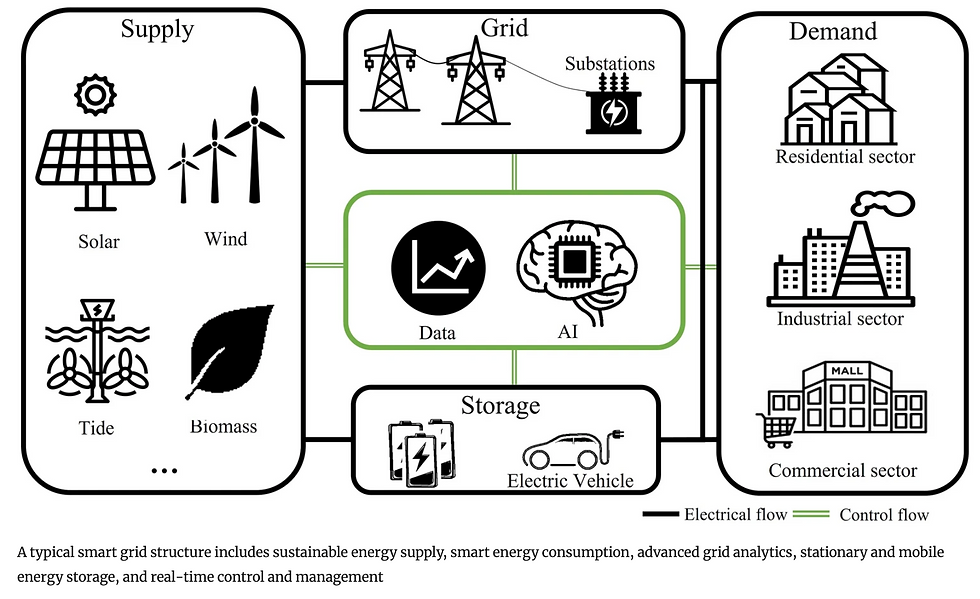
Vehicle‑to‑Grid (V2G):
Technology that allows EVs to feed electricity back into the grid during peak demand periods.

Examples of Grid Innovation in Action
1. UK National Grid’s “SmartGrid Great Britain” Initiative
The UK is investing heavily in smart meters, AI‑based load balancing, and grid digitalization.
This innovation supports the country’s net‑zero 2050 goal by connecting more renewable energy to households and storage systems.

2. Tesla Powerwall and Powerpack Systems (U.S. and Australia)
Tesla’s battery innovations allow homes and utilities to store solar energy and stabilize local grids.
South Australia’s “Hornsdale Power Reserve”, powered by Tesla, has become a global reference for renewable integration success.

3. Singapore’s Smart Energy Grid Project
Singapore uses AI‑driven grid management and predictive maintenance to support dense urban populations and renewable integration with minimal service disruption.

4. Japan’s Microgrid Deployment Post‑Fukushima
Many regions in Japan now use local microgrids powered by renewable energy to increase disaster resilience.

📊 Why Grid Innovation Matters
Benefit | Description |
Stability | Prevents blackouts and manages fluctuating renewable energy flows. |
Efficiency | Reduces energy loss and improves demand‑supply balance. |
Sustainability | Enables higher renewable energy capacity and lower emissions. |
Resilience | Strengthens the grid against cyberattacks, weather extremes, and natural disasters. |
Affordability | Optimizes energy costs through digital management and smart pricing. |
In Summary
Grid innovation is the backbone of the clean energy transition.
It merges engineering, digital intelligence, and sustainability to build a power system ready for the demands of a decarbonized, electrified future — one where homes, cars, and industries both consume and contribute to the grid.
References & additional readings
https://www.cavliwireless.com/blog/nerdiest-of-things/smart-grids-intelligent-energy-management
https://www.electricity-today.com/smart-grid/distributed-energy-resources-small-scale-power
https://link.springer.com/article/10.1007/s40684-023-00537-0
https://govinsider.asia/intl-en/article/singapore-to-build-its-first-district-level-smart-grid
https://spectrum.ieee.org/postfukushima-japanese-companies-build-microgrids
#GridInnovation #SmartGrid #EnergyTransition #CleanEnergy #Sustainability #RenewableEnergy #Decarbonization #ClimateAction #Technology #Resilience


Comments